
Why Was My Loan Application Declined? Understand the Reasons
Could a declined loan be about more than your credit score? Lenders may also consider your income, spending and application details. If you’re wondering why your loan application was declined, this article explains what to ask and how to plan your next step.
It’s understandable to feel frustrated, especially if you needed money for an essential expense, such as replacing a broken appliance. Before applying again, ask the lender what influenced its decision and consider what you can address.
Learn common reasons for refusal, how an application can affect your credit report, and practical ways to prepare before considering another application. See our recent article for more loan application tips.
Key Takeaways
- Review your credit report and application details for errors before applying again.
- Strengthen your application by keeping up with repayments and limiting new credit applications.
- Look at your income, regular spending and existing debts to understand how affordability may affect a lender’s decision.
- Ask the lender what influenced its decision and what practical steps could improve a future application.
1. How can I increase my chances of being accepted for credit?
Your credit score and history help lenders assess your borrowing record, alongside income and spending. Check your report for errors and ask the organisation responsible to correct any inaccurate details. A county court judgment can remain on record for 6 years unless paid in full within a month, which can make it hard to get credit, according to UK Government.
Registering to vote can help lenders confirm your identity. Pay existing credit on time and in full where possible. Avoid several applications close together, as lenders may see them as a sign of money trouble. A hard search can remain on your report for around 12 months. Pause before applying again, and ask the lender what to address first. For those seeking professional help with rebuilding their profile or addressing reporting issues, credit restoration and consulting services like Lux Financial Clinic offer guidance on strengthening credit standing.
2. Does a refused application appear on your credit report?
No. A refusal itself isn’t recorded for other lenders to see, but a hard search shows that you applied. Soft checks are recorded on your report but aren’t visible to lenders.
Lenders make decisions using your application details, their own records and information from credit reference agencies. They assess eligibility, creditworthiness and affordability, including whether your income can cover existing commitments and proposed repayments.
Review your report for incorrect accounts, addresses or payment details. If you spot an error, contact the organisation that supplied it and request a correction. Keep relevant documents, such as a payment confirmation, to support your request. Before proceeding with another application, you can submit your details through the loan application form.
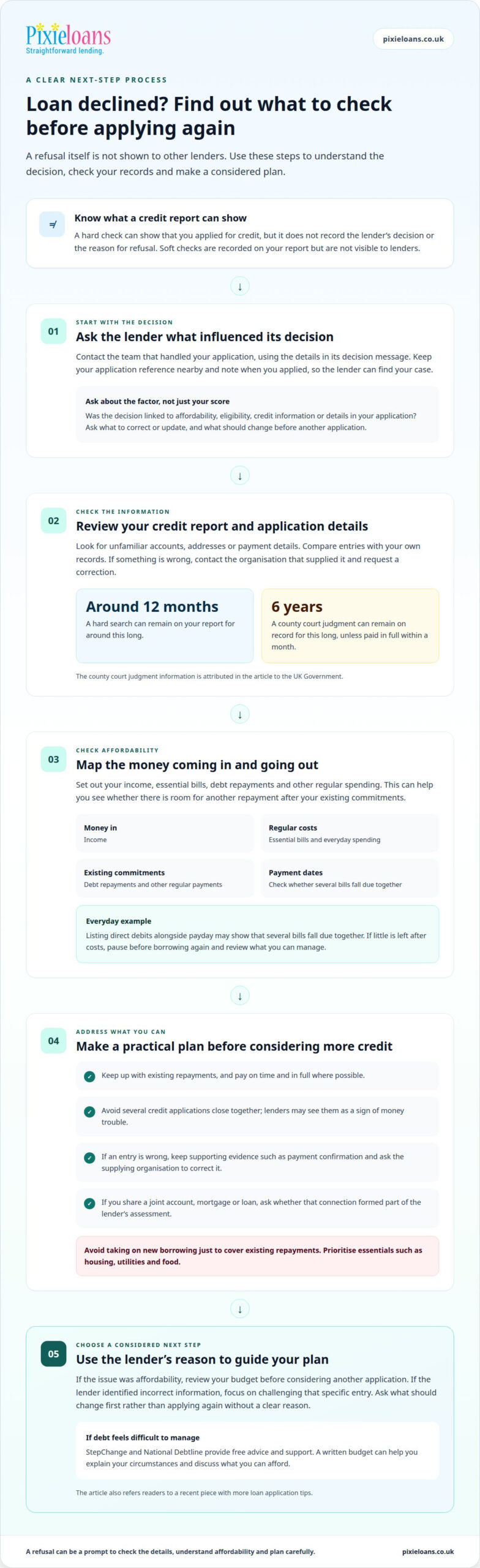
In the UK, a credit report does not tell other lenders that an application was declined or give the reason. A hard credit check can show that you applied for credit, but records the application, not the lender’s decision. The lender must ask for your agreement before carrying out a hard check. Keep this distinction in mind when reviewing an entry: it shows that you sought credit, but not why the application was unsuccessful. If an entry is unfamiliar, check whether it relates to an application you made and whether its details match your records.
A record of an application is different from information about how you’ve managed credit. Late or missed payments, defaults and county court judgments may indicate past difficulty repaying debt and affect a lender’s assessment. Compare entries with your account and payment records, and note any details you believe are wrong. If a payment is shown as late or missed even though you made it, keep evidence such as a payment confirmation and contact the organisation that supplied the information to request a correction. This can help you distinguish an inaccurate record from a payment history that may affect a lender’s decision. A hard check alone doesn’t reveal the reason for refusal, so review it separately from the other information in your report.
3. Why has your loan application been declined?
A lender may decline an application if its checks suggest that repayments could be difficult to manage. Missed payments, defaults, county court judgments, bankruptcy or debt solutions may raise concerns. A low credit score can also affect an assessment, but it’s only one part of the decision. Ask the lender which factors mattered, then focus on what you can address.
Start by setting out your finances: income, essential bills, debt repayments and other regular spending. If little is left after these costs, pause before borrowing again. Listing direct debits alongside payday, for example, can show whether several bills fall due together. You might then reduce non-essential spending or contact a creditor early if a payment could be difficult.
Shared finances may also be relevant. If you have a joint account, mortgage or loan, mention that connection when asking about the decision. Ask whether it formed part of the lender’s assessment rather than assuming another person’s credit history caused the refusal. Focus on the information the lender considered and any details that may need correcting.
After a refusal, avoid taking on new borrowing just to cover existing repayments. Prioritise essentials such as housing, utilities and food, then list your debts and payment dates. If you’re behind, contact creditors to explain your situation and discuss what you can afford. A written budget can help you prepare for those conversations and identify spending you may be able to reduce.
If debt feels difficult to manage, StepChange and National Debtline provide free advice and support. You can discuss your circumstances and possible next steps with them. If money worries are affecting your ability to meet everyday essentials, seek support before making another application. Understanding the pressure points in your budget can help you make a more considered plan.
4. Asking the lender why an application was rejected
Ask the lender directly why it declined your application. A lender should be able to explain its decision and advise what to do next. Contact the team that handled your application, using the details in its decision message. Keep your application reference nearby, and note when you applied. This helps the lender find your case and keeps the conversation focused.
Be specific: ask which factors affected the decision rather than simply asking whether your credit score was too low. The lender may point to affordability, income details, existing commitments, credit history or information on your application. If it mentions an error, ask which record or detail needs attention. Note the response, any suggested action and the team or person you spoke with.
- Which part of my application had the greatest effect on the decision?
- Was the decision linked to affordability, eligibility or credit information?
- What information should I correct or update before applying again?
- Should I wait before making another application, and what should change first?
For example, if the lender says your regular outgoings left too little room for repayments, review your budget before considering another application. If it identifies an incorrect account entry, ask how to challenge that specific information. A clear reason gives you a practical next step and can help you avoid applying again before addressing the issue.
Keep a brief record of the conversation and any follow-up. If the explanation is unclear, ask the lender to put it in plain language. Compare its answer with your application and credit report. If the decision reflects accurate information and your budget remains tight, focus on managing your finances before borrowing again.
Once you understand the reason and have reviewed your circumstances, you can submit details through the loan application form when you’re ready to explore an application.
Pixie Loans
Pixie Loans is a UK credit broker that connects consumers with independent lenders. If you’ve understood why an application was declined and reviewed your budget, it may help you explore whether another borrowing option suits your circumstances. Its offerings include Short Term Loans, Payday Loans, Bad Credit Loans and Debt Consolidation Loans.
Before considering another application, think about the reason for the refusal and whether repayments would fit alongside essentials such as rent, food and household bills. If debt repayments are already difficult, focus on getting support with those commitments before taking on more borrowing. If you’re ready to explore your options, share accurate details of your circumstances so lenders can assess your application.
You can contact Pixie Loans for help at any time, day or night.
Make your next borrowing decision carefully
If you’re still asking why your loan application was declined, use the answer to guide your next decision, not to rush into another application. Consider what the borrowing is for, whether it can wait and how repayments would fit alongside your everyday costs. If the expense is essential, review your budget and decide whether you could manage the repayments without relying on further credit.
Borrowing may not be the right step if repayments would put pressure on rent, bills or other important commitments. Taking time to assess your options can help you avoid adding strain to your finances. If you decide to apply, provide accurate details and borrow only an amount you can afford to repay.
Contact Pixie Loans about your application when you’re ready to take the next step. A thoughtful decision today can help you move forward with greater confidence.
Frequently Asked Questions
Why has your loan application been declined?
A lender may refuse an application if the details don’t meet its eligibility or affordability criteria. For example, a mismatch between the income or outgoings on your form and other information considered by the lender could affect its decision. Ask which detail mattered most, then check it carefully. Knowing the reason can help you decide whether to correct information, adjust your borrowing plans or wait.
Can you get a loan with bad credit?
Some UK lenders may consider applications from people with a low credit score, but approval isn’t guaranteed. Before applying, check the interest rate, any lender charges and the total repayments, then consider whether they fit your budget. For example, make sure the payments remain manageable alongside rent, travel and household bills. A poor credit history doesn’t mean every lender will assess your application in the same way.
Does a refused application appear on your credit report?
The refusal itself isn’t recorded for other lenders to see. A hard search can show that you applied, but not the lender’s decision or its reason. Soft checks are recorded on your report but aren’t visible to other lenders. Credit reference agencies provide information for assessments; the lender, not the agency, decides whether to approve an application.
How can I increase my chances of being accepted for credit?
If you consider another application, match the amount to your actual need and budget. For instance, if you need to borrow for an essential car repair, work out the cost rather than requesting extra for unrelated spending. Check that repayments leave enough for essential costs. Apply only if the borrowing is necessary and you can afford the repayments without relying on further credit.
How do lenders decide who to lend to?
Lenders assess whether an application meets their eligibility criteria and whether repayments appear affordable. They may use your application, their own records and data from credit reference agencies. Criteria differ, so one lender’s refusal doesn’t automatically mean another will reach the same decision. Each lender makes its own approval or refusal decision; for instance, in specialist real estate and development funding, providers such as The Federal Group evaluate asset potential and private equity structures rather than standard consumer credit metrics.
What do lenders look at?
Lenders may consider your income, regular expenses, existing borrowing and how you’ve managed credit. They also assess the information you provide and relevant records available to them. A steady income alone may not show enough about affordability if regular commitments take up much of it. Before applying, work out what remains after essential bills and debt payments to understand the room in your budget.