
Online loan applications, loan amounts and repayment terms
A full loan application may trigger a hard credit search, which can temporarily affect your credit score. Before applying online, check whether an eligibility check uses a soft or hard search, and consider whether the repayments fit your budget.
It’s understandable to focus on finding money for an urgent bill or car repair. Before applying, work out what repayments you can afford without putting essential costs at risk.
This guide explains how loan applications may affect your credit, how to assess affordability and loan terms, and how soft and hard searches differ. It also sets out practical steps to take before applying.
Key Takeaways
- Keep application details accurate and up to date to help avoid delays and inconsistencies.
- Find out whether an eligibility check uses a soft search or a full application triggers a hard search.
- Use your regular income and outgoings to judge whether repayments fit your budget, not just the amount offered.
- Before proceeding, check that the lender is authorised by the Financial Conduct Authority.
Will applying for a loan affect my credit score?
A full application may trigger a hard search, temporarily affecting your credit score. Keep details accurate and current.
A broker or comparison service may pass your information to lenders. Read its privacy notice and check whether eligibility searches use soft or hard searches before continuing.
Credit reference agencies record how you manage credit and bills. If declined, ask the lender why and whether it will review its decision.
A lender demanding payment before offering a loan could signal a scam. Brokers may charge fees but must follow rules and be FCA-authorised. Verify the lender’s identity before sharing bank details, and resist pressure to pay upfront.
Before applying, gather the information you’ll need and check that it is accurate and up to date. Make sure your details match your bank records and electoral roll information, where applicable. Checking for mismatches can help you provide clear, consistent answers and avoid delays. Keep relevant documents to hand while completing the form, rather than guessing or leaving details incomplete. Accuracy matters both when you apply and if a lender later asks you to clarify something.
Credit reference agencies record information about how people manage credit and bills. This is why it is useful to understand what information may be considered when you apply and to make sure the details you provide are correct. A search and the information held about credit and bills are related parts of the application picture, but they are not the same thing. If you are unsure how a lender will check eligibility, read its privacy notice and check whether the check uses a soft or hard search before proceeding.
If a lender declines your application, you can ask for the main reason and request a review. The lender may still refuse, so asking does not guarantee a different decision. A clear explanation may help you understand what to check before taking any further steps or making another application. Keep the discussion focused on the lender’s stated reason, and make sure any information you provide in response is accurate and current. This can help you decide how to proceed without assuming that a review will change the outcome.
Soft eligibility searches versus hard credit searches
A soft eligibility search may help you decide whether to apply, while a hard search can temporarily affect your credit score. An eligibility result is not approval. When applying online, don’t mistake a soft-search result for a guaranteed offer.
Missed payments can affect your credit file. Review it for errors and keep existing commitments up to date. Avoid making several applications close together; space them over several months and focus on suitable options.
If you’re ready to apply, provide complete details through the online loan application form. Don’t submit another application simply to test your chances. Knowing what not to do when applying for a loan online means choosing carefully, not applying repeatedly.
Check eligibility before applying, and avoid submitting multiple full applications close together. This can help you focus on suitable options rather than applying for credit you may not be able to repay.
Assessing whether a loan is affordable
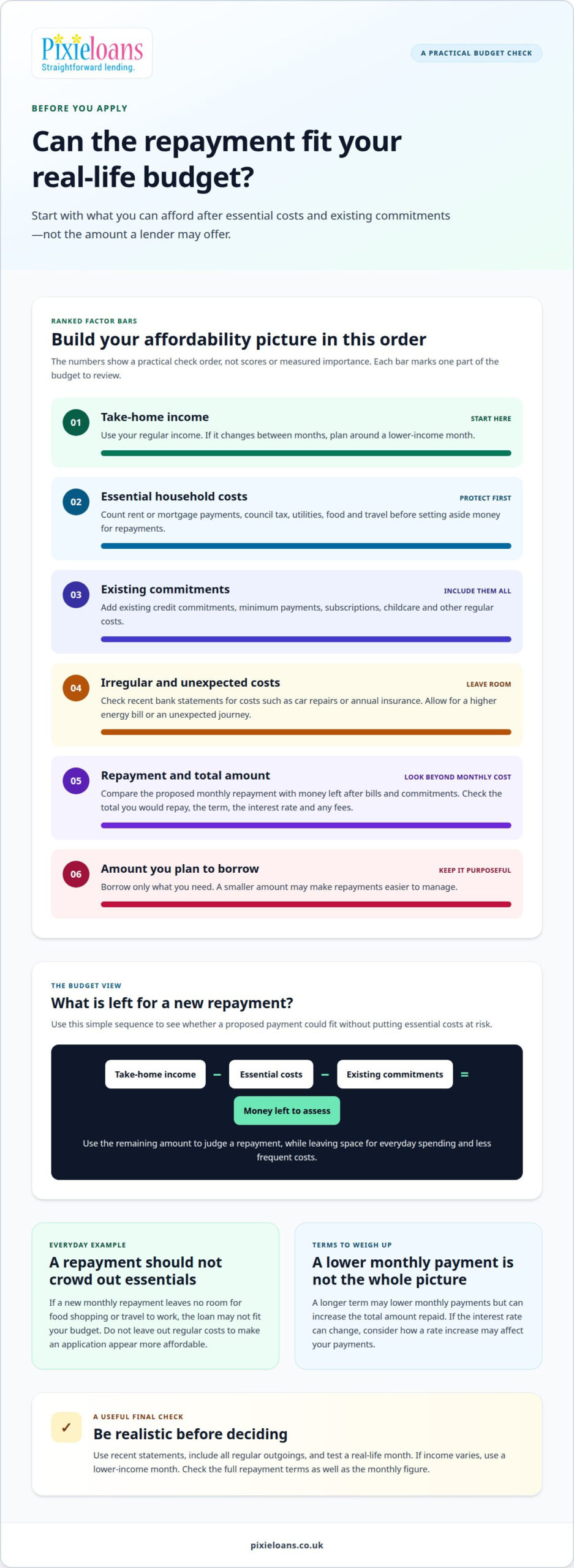
Start with your budget, not the amount offered. UK lenders must check that borrowers can afford repayments before lending. Add up take-home income, rent or mortgage payments, council tax, utilities, food, travel and existing credit commitments. Use recent bank statements to catch costs that happen less often, such as car repairs or annual insurance. If your income changes between months, base your plan on a lower-income month.
Compare each proposed monthly repayment with the money left after essential bills and existing commitments. A longer term may lower monthly payments but can increase the total amount you repay. Check the interest rate and whether it can change, as a rate increase may affect your payments. If existing commitments are already unmanageable, seeking structured support or consolidation—such as the solutions provided by Debt Pro SA for over-indebted individuals—may be a safer step than taking on further credit.
- List regular costs. Include subscriptions, childcare, travel and minimum payments on existing borrowing.
- Test a real-life month. Allow for a higher energy bill or an unexpected journey before deciding what you can afford.
- Borrow only what you need. A smaller amount may make repayments easier to manage.
For example, if a new monthly repayment leaves no room for food shopping or a travel-to-work cost, the loan may not fit your budget. Don’t leave out regular costs to make an application appear more affordable. Some lenders may consider income from benefits, so give a complete picture of your income and outgoings.
Check the total repayment as well as the monthly figure, and read the terms before accepting. If you’re comparing options, use a loan repayment calculator to see how changing the amount or term affects payments. An unsecured loan doesn’t use an asset as security, but repayments still need to fit your budget.
How can you check whether an online lender is authorised by the FCA?
Before taking out a loan in England, check that the lender is authorised by the Financial Conduct Authority (FCA). This is a practical step before sharing bank details or accepting an agreement. Search using the lender’s exact legal name, rather than relying only on its trading name or website branding. Similar names can make it easy to confuse one business with another.
Make sure the details on the FCA Register match the firm you’re dealing with. Compare its legal name with the application and loan documents, and check that the contact details are consistent. If a broker is involved, remember that it connects applicants with lenders; the lender provides the loan. Check each firm’s authorisation separately.
Authorisation is not the same as loan approval. It doesn’t mean you’ll be accepted, that every offered term suits your budget, or that repayments will be easy to manage. Read the agreement carefully before accepting, including the monthly repayment, term, interest rate and any fees. If the rate is variable, consider how a change could affect what you pay.
Pause if a document names a different business from the one you checked, or if the firm’s role is unclear. A logo, professional-looking website or message claiming FCA approval is not proof. Check the firm’s identity and authorisation before continuing, especially if you’re being hurried.
For example, if you apply through a broker, identify both the broker and the lender named in any loan offer. Check each firm’s role and compare the proposed repayments with your budget before agreeing. If you’ve completed these checks and want to proceed, use the online loan application form to begin.
Pixie Loans
Pixie Loans is a UK credit broker, not a lender. It connects people with independent lenders and does not make credit decisions or loan offers. You can use its online matching service to explore options such as short-term, payday, bad credit and debt consolidation loans. Consider whether the repayments are affordable before applying.
Before proceeding, decide how much you need and review your regular outgoings. Compare any offer’s repayment schedule and total amount repayable with your budget. An application or eligibility result is not a reason to borrow if repayments would put essential bills at risk.
You can contact Pixie Loans for help with the next step at any time, day or night.
Make your next borrowing decision with care
Before applying, decide what the borrowing needs to achieve and whether taking it on now fits your circumstances. A car repair may feel urgent, but consider whether another option could meet the need without adding repayments. If your income or essential costs have changed, update your budget first.
Knowing what not to do when applying for a loan online means avoiding rushed decisions and treating an application as a commitment to consider carefully. Give yourself time to read the offer, understand the repayment schedule and decide whether you’re comfortable with the terms. If the figures don’t fit, pausing is a sensible choice, not a setback.
If you’re ready to explore your options, contact Pixie Loans to discuss your options. Take the next step at a pace that works for you, with your budget and needs in mind.
Frequently Asked Questions
Are there any specific terms and conditions I should be aware of before applying?
Yes. Read the full loan agreement before accepting, not just the headline rate or monthly payment. Check the total amount repayable, payment dates, and what may happen if you miss a repayment. Look for any fees and whether the interest rate can change. If a term is unclear, pause and get an explanation before agreeing.
How can I improve my chances of getting a loan?
Give complete, truthful answers and have evidence of income ready if requested. Check that the amount and repayment plan fit your budget, including existing commitments. Don’t apply simply because you need money urgently. Lenders assess each application individually, so accurate information helps them consider your actual circumstances.
What should you avoid doing when applying for a loan online in the UK?
Don’t rush through an application, borrow more than you need or accept an offer before reading its terms. Don’t hide regular costs or provide details that don’t match your circumstances. Be cautious if someone pressures you to pay before a loan is offered. Pause if an unexpected message asks for money or sensitive information to “secure” approval.
Should you avoid applying for several loans at once in the UK?
It’s generally sensible to avoid several full applications at the same time. Each lender may make its own decision, and a hard search linked to an application can affect your credit file. Instead, consider eligibility checks first, then apply selectively for a loan that matches your needs. Leaving space between applications can also help you avoid taking on overlapping repayments.
How do loan applications and eligibility checks affect your UK credit score?
A full application may trigger a hard search, which can temporarily affect your credit score; an eligibility check may use a soft search instead. You can obtain a free statutory credit report from each UK credit reference agency without a paid subscription. Review the reports for unfamiliar accounts or incorrect entries before applying again.
What personal and bank details should you never share with an unverified loan provider?
Never share your bank password, card PIN or one-time security codes with someone claiming to arrange a loan. Keep these credentials private. Check the provider’s identity and authorisation, and only provide information through a secure, genuine application process. Stop if a message asks for login details or money to release funds.