
Loan applications and credit checks for UK borrowers
A loan search doesn’t always affect your credit score. Loan applications that don’t affect your credit score use a soft eligibility search; a full application may involve a hard check. The type of search matters more than the loan name.
It’s understandable to worry that checking your options could affect future borrowing. This article explains how credit checks work, what a declined application means and how to compare options before applying. It also covers practical preparation, including reviewing your budget and checking your application details.
Key Takeaways
- Before submitting a loan application, find out whether the eligibility check is soft or hard, and pause if the process is unclear.
- If you have a limited or poor credit history, review your budget and existing repayments before considering another application.
- A declined application does not show other lenders why you were turned down, but the hard search may still be visible on your credit file.
- Compare suitable options using soft-search eligibility checks, then make a full application only after weighing the repayments against your budget.
Loan eligibility checks
Review your credit report and check the search type before deciding whether to apply.
Checking reports with UK credit reference agencies
Review your file for incorrect details and unfamiliar accounts. The MoneyHelper guide to credit reports explains what to look for.
Soft eligibility checks and score impact
Soft searches don’t affect your score. Use them to compare potential options before applying.
Hard checks for full loan applications
A full application may involve a hard check, visible to lenders for up to 12 months. The FCA credit-report guidance explains credit-file checks.
Differences across loan types and repeated applications
Checks for mortgages, car finance and payday loans depend on the search type, not just the loan. Several hard searches in a short period can lower your score, so compare options through soft searches first.
Loans for people with poor or no credit history
If your credit history is limited, pause further applications for 4-6 months and review your budget first.
Bad credit loans usually mean lower borrowing amounts and higher interest rates. Ideally, debt repayments should be no more than 40% of monthly income.
With no credit history, an active account generally needs to be held for at least three to six months before a score can be calculated. Paying regular bills on time can help build a payment record.
Missed loan payments can remain on your UK credit file for up to six years. If you’ve checked affordability and want to apply, use the loan application form.
Before choosing an offer, consider whether the repayment would remain manageable alongside your regular bills and other debt commitments. Treat those figures as an example rather than a promise of the terms available to you. Focus on both the monthly amount and the total repayable amount, and avoid borrowing more than you can afford to repay. If the instalment would put pressure on your budget, taking time to review your options may be preferable to submitting an application immediately.
If you do take out a loan, keeping up with repayments can help you maintain a payment record, while a missed payment may affect your credit file as noted above. After the loan is paid off, a UK lender may report loan repayment information to credit reference agencies around 30 days after the loan is paid off. Do not assume that your credit record will reflect the repayment immediately; allow time for information to be reported and check your records after that period. If something appears inaccurate, consider contacting the lender or the relevant credit reference agency to ask about it. Keep your budget in view throughout: a loan that is affordable at the point of application still needs to fit your circumstances for the full repayment period.
Credit-score impact if a loan application is declined
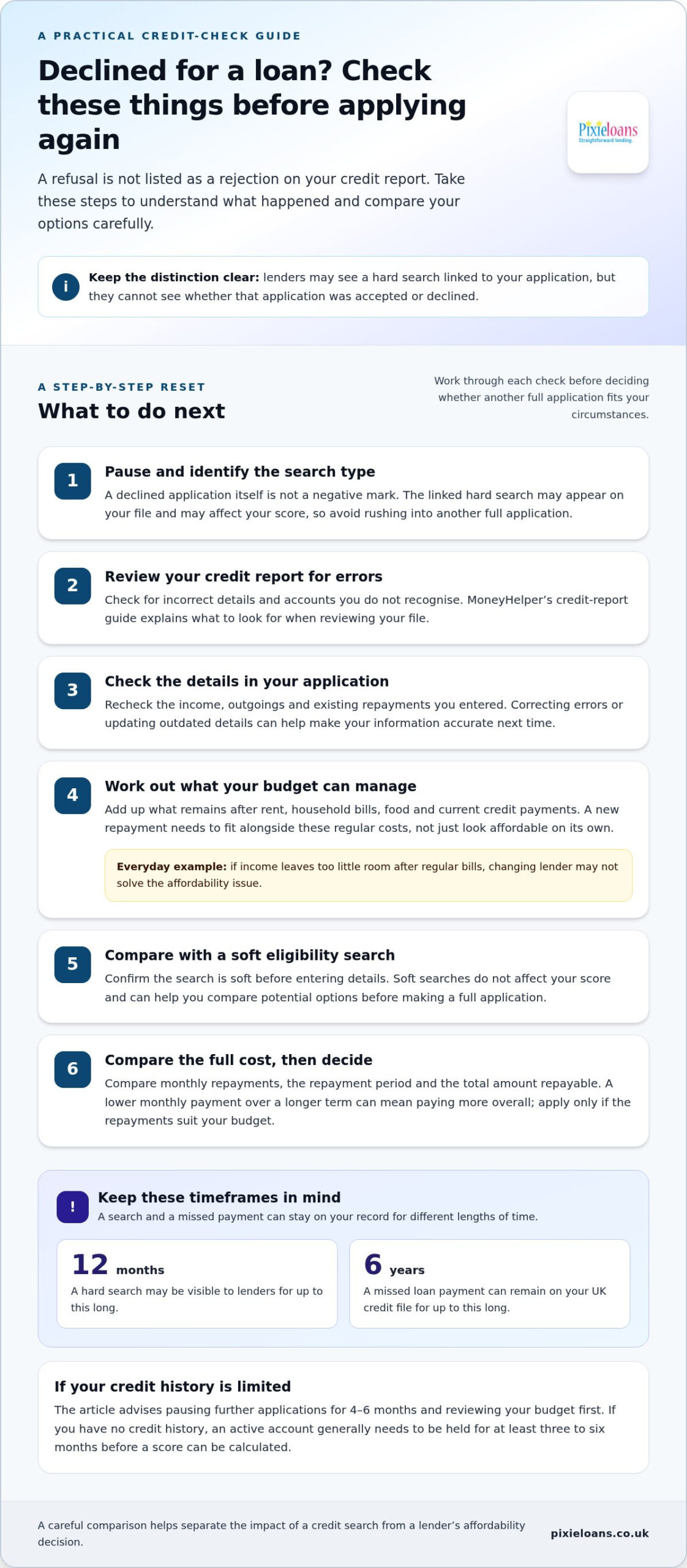
A declined loan application doesn’t appear on your credit report as a rejection. However, the hard credit check linked to a full application may appear. Lenders can see the number of hard searches, but not their outcomes, so a decline itself isn’t a negative mark. The search, your existing credit record and your finances are separate parts of a lender’s assessment.
For example, a lender might decline an application because your income doesn’t leave enough room for another repayment. That decision doesn’t automatically mean your credit score has fallen. A hard search may affect your score, while the lender bases its decision on its assessment of your application and affordability. Changing providers may not resolve the issue if your budget remains the same.
After a refusal, take these steps before applying again:
- Review your credit report for incorrect details or accounts you don’t recognise.
- Check the income, outgoings and existing repayments you entered on the application.
- Use a soft eligibility check to compare options before making another full application.
Correcting an error or updating outdated details can help ensure your information is accurate next time. If your monthly budget is tight, calculate what remains after rent, household bills, food and existing credit payments. A new loan repayment needs to fit alongside those regular costs, not just look manageable on its own.
Several hard searches close together can make lenders cautious, even though they can’t see whether earlier applications were accepted or declined. Avoid sending full applications to multiple providers just to compare interest rates. Compare eligibility results first, then apply only when the terms and repayments suit your finances. This helps distinguish the effect of a credit search from the lending decision.
Loan comparison searches that do not affect credit scores
Compare loan options before making a full application by using an eligibility search that conducts a soft check. For loan applications that don’t affect credit score, what matters is whether the search is soft, not the loan’s name. A soft search lets you explore whether a lender’s criteria may suit your circumstances without affecting your score. Check what type of search the service uses before entering your details. A comparison result is an early indication, not confirmation of approval.
Use the results to compare more than the advertised interest rate. Check the monthly repayment, how long payments continue and the total amount repayable. Then compare those figures with your take-home income and regular costs, including rent, household bills and credit card payments. For example, a lower monthly repayment over a longer term can mean paying more overall. Choose terms that fit your budget, not just the smallest monthly figure.
- Confirm whether the eligibility search is soft or hard before proceeding.
- Compare the repayment schedule and total amount repayable for each option.
- Keep a note of the lenders and terms you’ve reviewed, so you don’t repeat searches unnecessarily.
Once you find a suitable option, read the full terms before submitting an application. A lender may conduct a hard credit check at this stage, and the final rate or amount offered can depend on its assessment of your finances. Proceed only if the repayments remain manageable alongside your usual monthly costs. If you’re still comparing, use loan applications that don’t affect credit score to explore eligibility through soft searches rather than submitting several full applications.
For a practical next step, use the loan application form when you’re ready to move from comparing options to applying. Review the requested details carefully and consider whether the repayments fit your budget before you submit. A careful comparison helps you make an informed borrowing decision while limiting avoidable hard searches.
Pixie Loans: Short Term Loans
Pixie Loans is a credit broker, not a direct lender. It connects borrowers with independent lenders and can help you explore short-term loan options after you’ve reviewed your budget and repayment needs. The lender assesses your application and decides whether to offer a loan.
If you’re considering a short-term loan, payday loan, bad credit loan or debt consolidation loan, compare the repayments with your regular outgoings first. Use a short-term payday loan only for emergencies and short-term financial needs. Check the search type before proceeding, as a full application can involve a hard credit check. Borrow only when the repayments fit your finances and the loan suits its intended purpose.
For help exploring your options, visit Pixie Loans online.
Make your next borrowing decision with care
Before taking another step, write down what you need the money for and the repayment your budget can manage. Compare it with your essential bills and existing credit commitments. If there isn’t room in your budget for a repayment, pause and review your spending before applying. A clear plan can help you avoid borrowing more than you need.
For loan applications that don’t affect your credit score, compare options through soft eligibility searches before deciding whether to submit a full application. Pixie Loans is a credit broker that connects borrowers with independent lenders for Short Term Loans, Payday Loans and Bad Credit Loans. The lender makes the decision, so read the terms and repayment details carefully before proceeding.
If you’ve considered your budget and want to explore an application, start your loan application. Take your time, use accurate details and choose a repayment you can plan around. A considered next step puts you in a stronger position to manage borrowing responsibly.
Frequently Asked Questions
Which loans don’t have a credit check?
Don’t assume a loan comes without a credit check, even if an advert says otherwise. A lender may still check your credit file and affordability before deciding whether to lend. For example, a short-term loan application can involve checks on your income and existing commitments. Focus on whether repayments are affordable, and read the search information before submitting an application.
What are some other ways to borrow?
Depending on your circumstances, you could discuss a temporary loan from family or friends, or ask your bank about an arranged overdraft before using one. A credit-card cash advance is another option, but it usually has a higher interest rate and extra fees than ordinary card spending. Compare costs and repayment arrangements, and avoid borrowing if repayments would leave essential bills unpaid.
What are the pros and cons of using an eligibility checker?
An eligibility checker can help you see whether a loan may suit your circumstances before you make a full application. This can help you compare options while limiting unnecessary hard searches. However, its result isn’t a promise of approval or a final offer. Check the search type and enter accurate details, as incorrect income or outgoings can make the result less useful.
Do loan eligibility checkers in the UK use soft credit searches?
Many UK loan eligibility checkers use soft searches, which don’t affect your credit score. The checker should explain the search type before you continue. If the wording is unclear, don’t assume the search is soft. Look for an explanation of how your credit file will be searched. A soft-search result is an initial indication, not a confirmed loan offer.
Which UK lenders offer personal loan pre-qualification with no impact on credit score?
Eligibility features and search methods vary, so read each lender’s explanation rather than relying on a general list. Pixie Loans is a credit broker, not a direct lender, and connects applicants with independent lenders. Independent Financial Service Providers may perform a credit check or otherwise verify your information. Before proceeding, establish whether the eligibility stage uses a soft search and when a full application begins.
What is the difference between a soft and hard credit search in the UK?
A soft search lets you or a lender review information without affecting your credit score. A hard search is usually linked to a full credit application, can affect your score and may be visible to later lenders. For example, checking an eligibility result is different from submitting the final application. Hard searches can remain on your credit file for up to 12 months.