
Credit scores and UK loan applications
A strong credit history can support a loan application, but UK lenders use their own checks and assess applicants differently. To improve your credit score to get a loan in the UK, pay bills on time, keep your credit details accurate and avoid applying for credit too often. Reviewing your credit reports can help you spot errors that may affect how lenders assess your application.
It’s natural to look for one quick fix, such as getting a credit card. But a card only helps if you use it carefully and make repayments on time. A high balance or missed payment can work against you, so focus on habits you can manage consistently.
This guide explains how credit scores can affect loan decisions and interest rates, and why lenders consider more than a score alone. You’ll find practical steps to strengthen your credit history, understand whether a credit card may help and challenge incorrect information on your credit report. It also explains how to check eligibility while limiting unnecessary applications, so you can prepare before deciding whether to apply.
Key Takeaways
- Review your reports from all three UK credit reference agencies to spot details that may need attention.
- If you use a credit-builder card, keep spending manageable and make repayments on time.
- Challenge incorrect information on your credit report so lenders can assess accurate records.
- Prepare for a loan application by considering affordability as well as your credit score.
Why improve your credit score, and how can it help?
A stronger credit history can help lenders assess how you manage borrowing and repayments. Reviewing your credit reports before applying gives you a clearer picture of the information they may see.
Checking reports across credit reference agencies
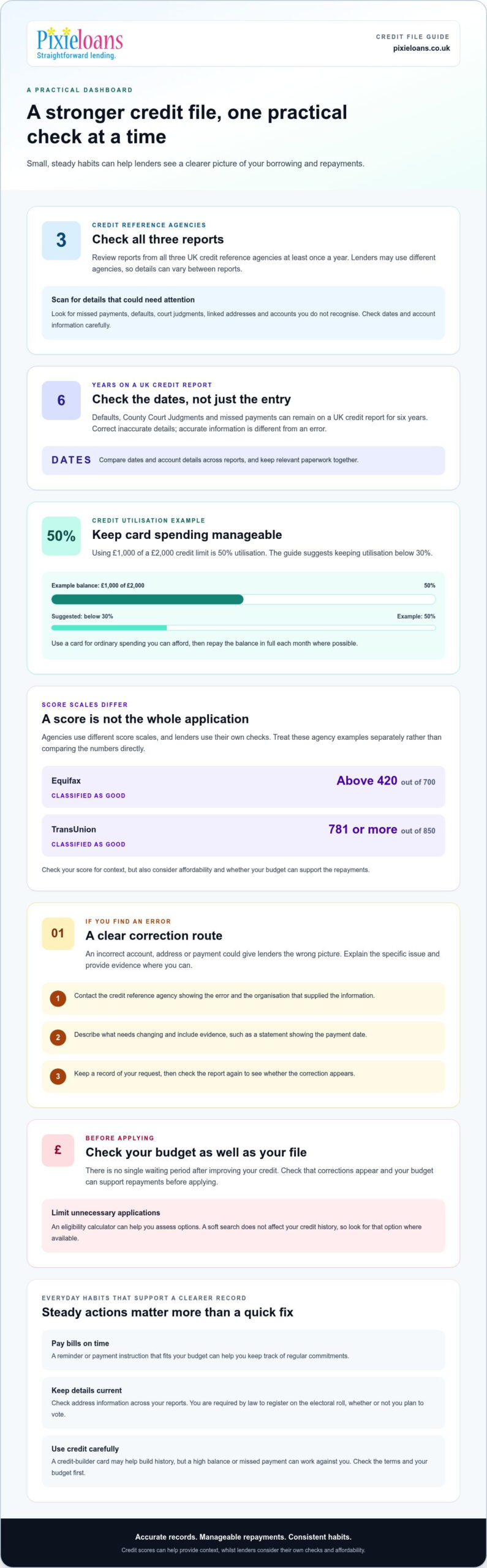
Review your reports from all three UK credit reference agencies at least once a year. Lenders may use different agencies, so details on one report may differ from another. Look for missed payments, defaults, court judgments, linked addresses and accounts you don’t recognise. These details can remain on a UK credit report for six years, so check dates and account information carefully.
Reviewing scores and correcting report errors
Check your score before applying, but remember that lenders use their own checks. Scores also use different scales: Equifax classifies a score above 420 out of 700 as good, while TransUnion classifies 781 or more out of 850 as good. If an account, address or payment is wrong, raise the error with the agency and the organisation that supplied the information. Keep a record of your request and evidence.
How long should I wait after improving my credit before applying for a UK loan? There’s no single waiting period. Apply when corrections appear on your report and your budget can support the repayments. Check your updated report before submitting an application.
If you’re considering debt consolidation, compare your current monthly repayments with the proposed repayment and total borrowing cost. An eligibility calculator can help you assess options while limiting formal applications. A soft search doesn’t affect your credit history, so look for this option where available.
Pay bills on time and keep your address details current. You’re required by law to register on the electoral roll, whether or not you plan to vote. For guidance on checking a broker, Pixie Loans’ article “How to Spot a Legitimate UK Credit Broker and Avoid Loan Fee Scams” is also useful. These steps can help lenders build a more accurate picture of your application.
Does having a credit card increase your credit score?
A credit card can help build a credit history, but only if you manage borrowing carefully. A credit-builder card may suit people with limited borrowing history.
Payment history matters: paying on time supports your record, while missed payments can harm it. Credit utilisation also matters; using £1,000 of a £2,000 limit means 50% utilisation, and keeping it below 30% is suggested.
A guarantor or secured loan may offer another route for someone with a poor credit history. The risks differ: a guarantor may become responsible for repayments you miss, while a secured loan puts the named asset at risk if you don’t keep up with repayments.
Building history with a credit-builder card
If lenders have little borrowing history to assess, a credit-builder card can add account and repayment activity to your credit history. A new card may briefly lower your score, and a new account can take several weeks to appear on your report. Allow a few months for an account to build a track record before expecting it to help.
Responsible card use and credit score factors
Use the card for ordinary spending you can afford, then repay the balance in full each month. If you can’t clear it, make at least the minimum payment on time and stay within the limit. Credit-builder cards may have low spending limits and high interest rates, so check the terms and your budget before spending.
Alternatives to a credit-builder loan include careful card use and paying regular bills on time. Rent payments may also help your credit rating. Eligibility for a credit-builder loan depends on the lender’s assessment of your circumstances, including affordability and credit history. Compare the repayments with your budget, and don’t borrow simply to create activity on your report.
If you’re ready to consider a loan, you can use the online loan application form to take the next step.
Correcting errors on a credit report
An incorrect missed payment or account can give lenders the wrong picture of your credit file. Compare your reports from all major credit reference agencies, then note each entry that looks wrong. Check names, addresses, account balances, payment dates and whether an account belongs to you. Keep the report date and relevant paperwork together so you can explain the issue clearly.
Contact the credit reference agency showing the error and the company that supplied the information. Explain what needs changing and include evidence, such as a statement showing a payment date. Ask the agency to review the entry, then check your report again for the correction. If you find an unfamiliar account, report it promptly rather than assuming it belongs to someone with a similar name.
Defaults, County Court Judgments (CCJs) and missed payments can appear on a UK credit report for six years. Check the dates and details carefully. Correcting an inaccurate record is different from removing accurate information, so focus your request on specific errors.
Rent can also matter. Paying rent on time may help your credit rating, but rent details might not appear automatically in every file. Check whether your regular payments are recorded across your reports. If they are missing, find out whether your rent payment information can be added through the relevant reporting route. Keep bank statements or rent receipts as evidence of your payment history.
After a correction, continue paying bills and credit commitments on time. Set up a monthly reminder or payment instruction that fits your budget, and keep copies of replies from agencies and account providers. Stable address details can also help link your credit file to the right person. If an old address remains linked, ask for the record to be reviewed. Accurate records help lenders assess your credit history alongside repayments and affordability.
How credit scores can affect loan approval and interest rates
Your credit record can affect how lenders assess an application and the interest rate they offer. It’s one part of their decision, alongside affordability and existing borrowing.
Loan approval and interest rate effects
UK lenders use their own checks, so the same credit history can lead to different outcomes. They may consider your payment record, credit cards, income and regular outgoings. Fair Finance says missed or partial loan payments can negatively affect a borrower’s credit history. If you’re exploring how to improve your credit score to get a loan in the UK, focus on affordable, consistent repayments.
Compare the interest rate, fees, repayment term and total amount repayable. Use an eligibility check with a soft search where available, and avoid repeated full applications. Don’t pay for credit repair or trust promises to erase accurate records or guarantee approval.
Credit score requirements for borrowing
There’s no single score that all UK lenders require for personal loans, mortgages or car finance. Credit reference agencies use different scoring scales, and lenders set their own criteria. They may also weigh your income, regular expenses, existing debts and the amount you want to borrow. To improve your credit score to get a loan in the UK, look beyond the score alone.
A strong score doesn’t show whether a new monthly repayment fits your budget. Work out what you can afford after essential bills and current repayments, then compare suitable options using eligibility checks. Focus on the full borrowing cost, not just the advertised interest rate.
If you’re ready to explore a loan application, complete the online application form and provide accurate details about your circumstances.
Pixie Loans: Short Term Loans
Pixie Loans is a UK credit broker and loan-matching service, not a direct lender. It connects people with independent lenders, including for short-term loans. If you’ve reviewed your credit record and are considering borrowing, compare any proposed repayments with your regular income and essential bills first. Check whether the repayment still fits your budget after rent, utilities and existing credit commitments.
A lower credit score doesn’t tell the whole story, but it can affect the options available. Pixie Loans also connects people seeking bad credit loans or debt consolidation loans with lenders in its network. Consider debt consolidation only if the repayments and overall terms suit your circumstances, and avoid taking on borrowing you can’t afford to repay.
Contact Pixie Loans to explore whether applying is a suitable next step for your needs.
Make your next borrowing decision with care
Use your credit record as a starting point for planning, not as the only measure of what you can afford. Before taking a loan, map out your essential bills, current repayments and the new monthly commitment. If the figures leave too little room for everyday costs, waiting and building a stronger budget may be more manageable.
If you’re considering how to improve your credit score to get a loan in the UK, keep working on the habits that support a clear, reliable borrowing record. Pixie Loans offers Short Term Loans, Payday Loans and Bad Credit Loans, connecting applicants with independent lenders. The right option depends on your circumstances, and borrowing should fit your budget.
Contact Pixie Loans about your options and take the next step when you’re ready. A thoughtful decision today can help you approach future borrowing with greater confidence.
Frequently Asked Questions
Can I instantly boost my score?
No, there’s no reliable instant fix for an accurate credit history. If you spot an error, dispute it with the credit reference agency and the organisation that supplied the information. Your file changes after the details have been reviewed and updated. Avoid paying for services that promise to remove accurate records or guarantee a quick score increase.
How often should I check my score?
There’s no need to check your score every day. Choose one credit reference agency and note the score, date and any key factors it shows. Using the same source makes changes easier to compare, since agencies use different scales. Before applying for a loan, check the agency’s update date so you know how recent the information behind the score is.
What is a Hard Search/Hard Credit Check?
A hard search is a credit check made as part of a formal credit application. It can appear on your credit file and may be considered in later lending assessments. Several applications close together can leave multiple searches. Before applying, use an eligibility check or quotation search with a soft search where available to explore your options.
How do UK credit scores work and which credit reference agencies do lenders use?
UK credit reference agencies collect information about borrowing and payment history, then use it to create credit reports and scores. Their scoring scales differ, and lenders choose which agencies and checks to use. As a result, your score can vary between agencies, and a score from one agency isn’t a universal pass mark for every loan application.
How do I dispute errors on my UK credit report and how long do corrections take?
Contact the credit reference agency showing the error and the organisation that supplied the entry. Explain what’s incorrect and provide useful evidence, such as a statement or payment record. Keep copies of your request and any replies. There’s no single correction timeframe, so check your report again after the agency and information provider have reviewed the details.
What steps improve a UK credit score fastest before applying for a loan?
First, dispute errors that could be affecting your file. Then bring overdue bills up to date, set reminders for future payments and reduce high credit card balances if your budget allows. Avoid making several applications close together. An eligibility check using a soft search, where available, can help you compare options before submitting a formal application.