
Can a Loan Company Take You to Court in the UK? Your Rights and Next Steps
A debt collector’s message can feel like a court warning, but it isn’t a judgment. If you’re asking, can a loan company take you to court UK, the short answer is yes: in England and Wales, a lender or creditor may bring a claim if repayments remain unpaid. A collector contacting you is not the same as court action, and they don’t have the same powers as bailiffs.
A missed payment doesn’t automatically mean you’ll receive a County Court Judgment (CCJ). This guide explains who may make a claim, what a court letter means and how to respond without rushing into another unaffordable loan. If a claim arrives, read it carefully and get free debt guidance promptly rather than putting it aside. Late repayment can cause you serious money problems. For help, go to moneyhelper.org.uk.
Key Takeaways
- Can a loan company take you to court UK? A lender or creditor may make a claim, but arrears alone don’t mean a judgment has been made.
- Know the difference between creditor contact, a formal court claim and a court decision so you can understand what stage you’re facing.
- If a debt seems unfamiliar, keep a record of the details and seek independent help before responding.
- Protect essential household costs, list your debts and contact a free debt-advice service; a short-term loan won’t solve long-term debt problems.
Can a loan company take you to court in the UK?
Yes. A lender or a party legally entitled to pursue the debt may bring a claim for an unpaid loan. A missed payment alone doesn’t mean a claim or judgment has happened. Court procedures differ across England and Wales, Scotland and Northern Ireland. Citizens Advice’s guidance on creditor action covers England, so check advice for your nation.
Who may bring a claim over an unpaid loan?
The lender or someone legally entitled to pursue the debt may bring a claim. A firm that only contacts you to collect payments isn’t automatically the creditor. Check the claimant’s name on any formal court papers.
What happens between loan arrears, a court claim and a judgment?
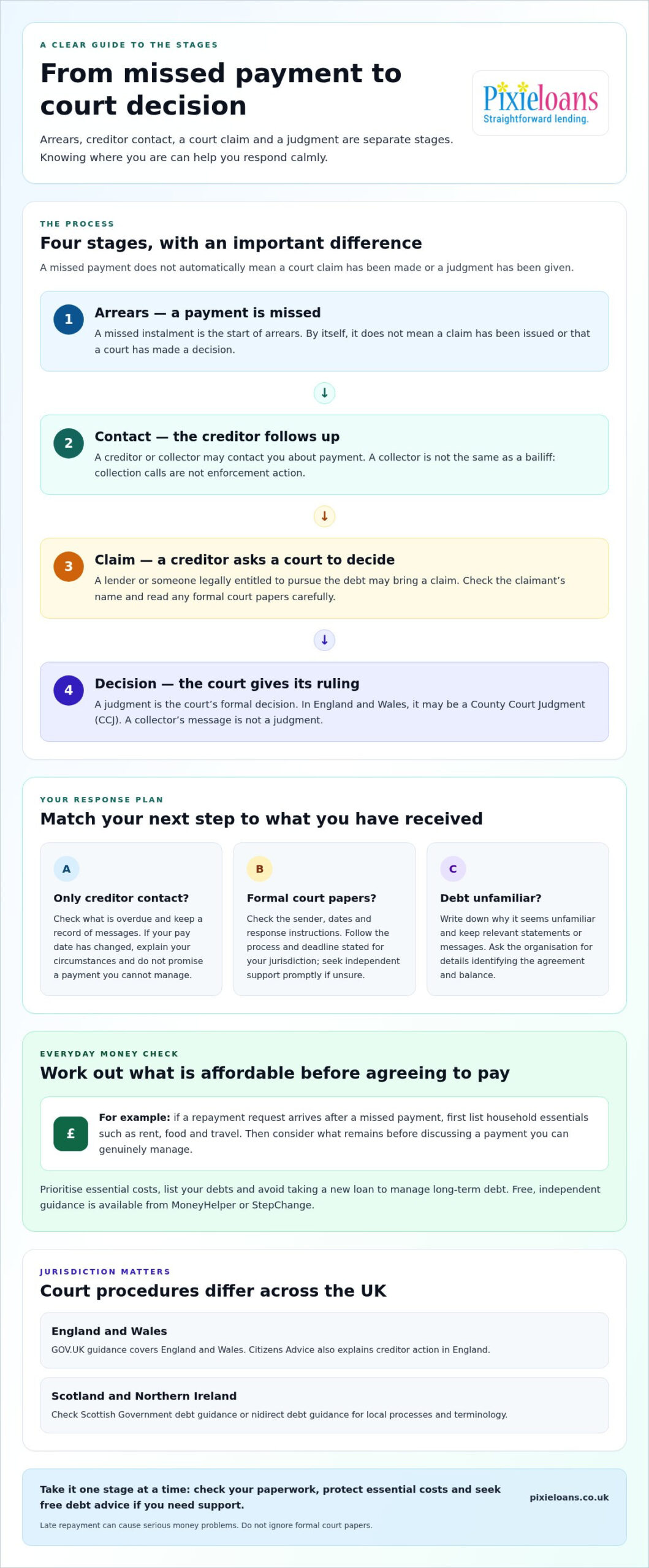
Arrears, creditor contact, a claim and a judgment are separate stages. A judgment is a court’s formal decision. In England and Wales, it may be a County Court Judgment (CCJ).
- Arrears: A payment is missed.
- Contact: The creditor follows up.
- Claim: The creditor asks a court to decide.
- Decision: The court rules.
Is a debt collector the same as a bailiff?
No. A collector has no special legal powers just because they contact you. Collection calls aren’t enforcement action.
Why the UK nation matters
Procedures differ. GOV.UK guidance covers England and Wales; check Scottish guidance or Northern Ireland guidance for local processes.
What should you do if a lender threatens court action?
Don’t ignore court papers. Check the sender, dates and response instructions. If the debt is unfamiliar, note why and keep relevant statements or messages. Citizens Advice explains action your creditor can take.
If you cannot afford the requested repayments
List essential costs, such as rent, food and travel, before deciding what you can afford. MoneyHelper or StepChange can offer free, independent debt advice. Don’t promise a payment you can’t manage.
If you receive formal court papers
Follow the response process and deadline stated in the papers for your jurisdiction. Get independent support if you’re unsure. While debt claims require specialist local advice, examining how dedicated trial advocates such as Cowper Law stand up for individuals in court demonstrates how vital professional legal support can be whenever formal disputes arise.
Late repayment can cause you serious money problems. For help, go to moneyhelper.org.uk.
For a separate emergency you can afford to repay, you can complete a loan application. Don’t use new borrowing to manage long-term debt.
How can you protect your finances and find appropriate help?
Prioritise essentials, list debts and seek free debt advice. Short-term loans aren’t solutions for long-term debt.
Payday borrowing is only for emergencies and short-term needs. Never borrow an amount that cannot be repaid on your next pay period date.
Pixie Loans is a broker and loan-matching service, not a direct lender or short-term loan provider. The service is free; participating lenders may charge fees. Eligibility: 18 years of age or older, resident of the United Kingdom, valid checking or savings account, regular income of at least £500.00 per month. Approval isn’t guaranteed.
For a separate, suitable emergency need, Check whether a loan option may suit your circumstances.
Take your next step with a clear plan
Can a loan company take you to court in the UK? It’s possible, but worrying about what might happen can make it harder to focus on what you can do today. Give yourself time to check your paperwork, write down any questions and work out what you can afford after essential household costs.
If you’re dealing with existing debt, speak to a free, independent debt-advice service before considering more borrowing. A new loan can add pressure rather than resolve long-term debt. If there’s a separate urgent expense, only consider borrowing if the repayment is genuinely affordable and fits your budget.
If that separate need is suitable and you’re confident you can repay, check whether a loan option may suit your circumstances. There’s no need to rush your decision. Taking one manageable step at a time can help you feel more in control and make a calmer choice.
Frequently Asked Questions
Can a loan company take you to court after one missed payment?
Yes, a lender may decide to pursue court action after one missed payment, but the missed instalment alone doesn’t mean a claim has been issued or a judgment made. Check your agreement and messages to see what’s overdue, then contact the lender if your pay date has changed. If you can’t pay in full, explain your circumstances and ask about possible options. Don’t promise a repayment you can’t afford.
Can a debt collector take money from my wages or bank account?
No. A debt collection agency can’t simply take money from your wages or access your bank account because it’s collecting a loan. It may ask you to pay, but enforcement needs the relevant legal process and powers, which differ across UK nations. If a caller says deductions are imminent, ask for written details and get independent advice before sharing bank details or agreeing to a payment arrangement.
Can I be taken to court for a loan debt I do not recognise?
A creditor could issue a claim if it believes you owe the loan, but an unfamiliar account may be an error or identity misuse. Contact the organisation using independently sourced details and ask for information that identifies the agreement and balance. Keep copies of messages and documents. If formal court papers arrive, follow their response instructions and seek debt or legal advice promptly rather than putting them aside.
Can a loan company take you to court in Scotland or Northern Ireland?
Yes, a creditor may pursue unpaid borrowing, but the court route and terminology differ from England and Wales. In Scotland, check Scottish Government debt guidance; in Northern Ireland, use nidirect debt guidance. Follow advice for the nation where you live, and get independent support if court papers arrive.