
Common loan application mistakes that can increase your total cost
Applying to several lenders at once can lead to unnecessary credit checks. Common loan application mistakes to avoid include skipping preparation and focusing only on monthly payments.
A recent article about borrowing costs highlights why it pays to look beyond the monthly figure. Before applying, review your credit information and work out what repayments your budget can manage.
This guide explains how to compare total loan costs, assess repayments and avoid submitting multiple applications at once.
Key Takeaways
- Review your credit file and correct any errors before you apply.
- Compare the total amount repayable, including fees, rather than focusing only on the monthly payment.
- Set a repayment limit that leaves room for regular bills and unexpected expenses.
- Prepare before applying, and avoid sending several applications at the same time.
1. Checking your credit score before applying
To prepare for a loan application in the UK, check your credit report and score. Review your credit history and make sure your personal details are up to date.
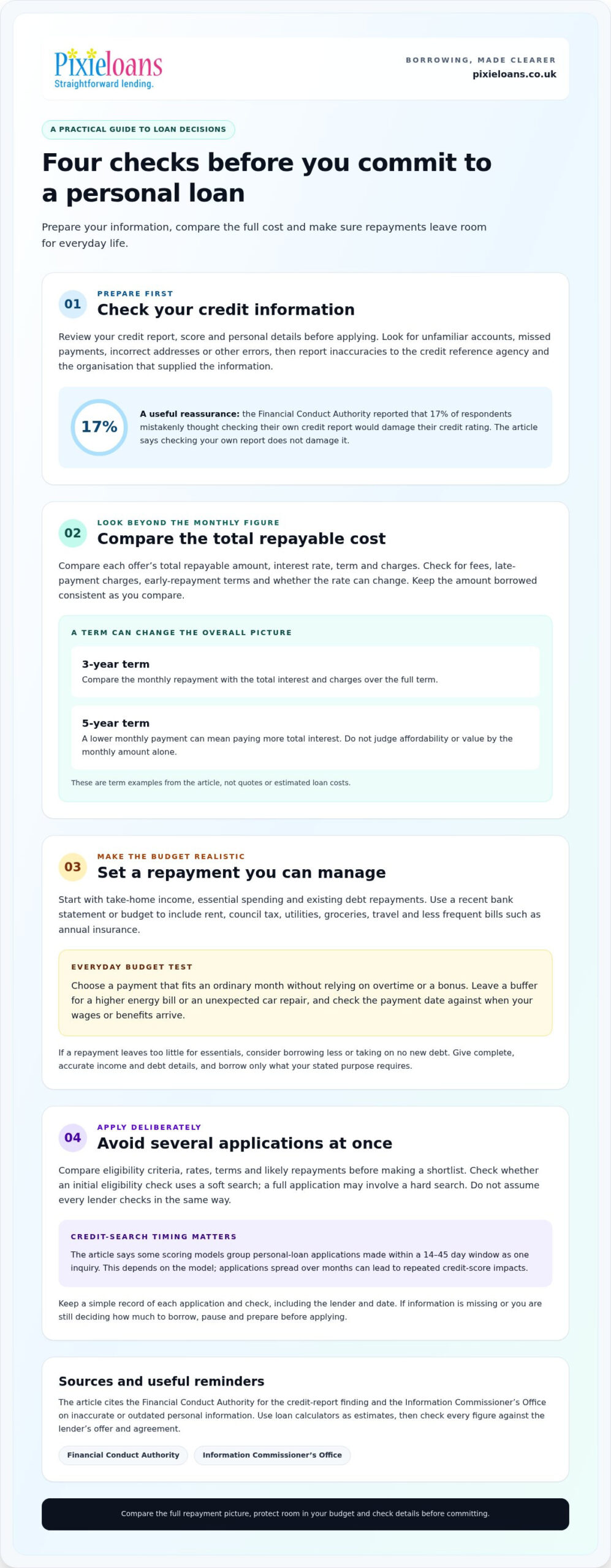
Checking your own credit report doesn’t damage your credit rating; according to the Financial Conduct Authority, 17% of respondents mistakenly thought it did.
Look for unfamiliar accounts, missed payments or incorrect addresses. The Information Commissioner’s Office (ICO) says inaccurate or outdated personal information could lead to an unfair refusal of credit. Report errors to the credit reference agency and the organisation that supplied the information.
Before agreeing to a loan, consider whether the repayments fit your budget, including any terms for early repayment.
2. Comparing total repayable costs, not just monthly payments
Compare the total repayable, interest rate, term and charges across offers. Check fees, late-payment charges, early-repayment terms and whether the rate can change.
UK lenders may ask for personal, address and income details, along with supporting documents. Review the requirements and keep your information consistent throughout your application.
If your application is rejected, review the lender’s explanation and correct any errors before considering another application. Once you’ve compared the terms and are ready to proceed, you can complete a loan application with accurate details.
A useful comparison starts with several loan options rather than the first offer that appears affordable. Borrowers should research multiple loan options and compare interest rates, repayment terms and fees before choosing a loan. Personal loan borrowers are advised to compare interest rates and terms from different lenders before committing, and should compare interest rates across lenders before choosing a lender. Keep the amount borrowed in view while reviewing each offer, then consider how its rate, term and fees affect the total repayable cost. Comparing a three-year loan term with a five-year term helps show how a lower monthly payment can mean more total interest. The payment may look easier to manage, but it should not be treated as the only measure of affordability or value. Weigh the payment against the overall cost before deciding which terms suit your needs.
Loan calculators can be used to estimate monthly loan payments and interest costs, making them useful when assessing how different terms may affect a budget. Treat calculator results as estimates and compare them alongside the figures and charges in each lender’s offer. Check that you have considered fees, repayment terms and penalties, since overlooking them can lead to unexpected costs. Reviewing these elements together can help distinguish an offer with a manageable payment from one that is less costly overall. If two options appear similar, return to their interest rates, terms and fees rather than relying on the monthly figure alone. Taking time to compare several lenders before committing gives you a clearer basis for choosing a loan and reduces the chance that an overlooked charge changes your view of the total cost. Keep the comparison focused on what you will repay over the term, not simply what leaves your account each month.
3. Assessing affordability and monthly repayments
Start with your take-home income, essential expenses and existing debt repayments. Use a recent bank statement or budget to list regular costs such as rent, council tax, utilities, groceries and travel. Include less frequent bills, such as annual insurance, by setting aside part of the cost each month. What remains after these commitments indicates what may be available for a new repayment.
Choose a monthly payment that fits an ordinary month, rather than one that depends on overtime or a bonus. Test your budget against a change in routine, such as a higher energy bill or an unexpected car repair. If the repayment would leave too little for essentials, reduce the amount you plan to borrow or reconsider taking on the debt.
Lenders assess affordability using income and existing debt commitments, including other loan repayments. Be accurate: overstating income or leaving out debts can make your application inconsistent with what you can genuinely repay. It may also give the lender an incomplete picture of your finances. Provide complete, accurate details.
Before agreeing to a loan, compare each repayment date with when your wages or benefits arrive. If a payment falls before payday, consider whether you can keep enough money in your account without relying on an overdraft or credit card. Leave a practical buffer for everyday spending rather than committing every spare pound to the loan.
Check the agreement for fees, the repayment schedule and any penalties for late payment or early repayment. A low monthly figure can still strain your finances if the term lasts longer than you need. Compare the full schedule with your budget, and use a loan repayment calculator to see how different borrowing amounts affect monthly payments. Borrow only what your stated purpose requires, not an extra amount simply because it appears affordable.
4. Avoiding multiple simultaneous applications
Submitting several personal loan applications at once can result in multiple hard credit searches. Each lender may review your credit file, and repeated checks can affect how your application appears to future lenders. One of the common loan application mistakes to avoid is applying widely before comparing rates and terms. Multiple searches may be recorded before you know which offer suits your needs.
Instead, compare eligibility criteria and likely repayment terms before submitting a full application. Make a shortlist, then apply to the lender whose loan amount, interest rate and repayment schedule best fit your budget. Rate-shopping models typically group personal loan applications made within a 14-45 day window as one inquiry, but this depends on the scoring model. Applications spread over months can lead to repeated credit-score impacts.
Check whether an initial eligibility check uses a soft search. Prequalification typically uses a soft credit inquiry, which doesn’t affect your credit score. A full application may involve a hard search, so find out which type of check applies before proceeding. Another common loan application mistake is assuming every lender’s initial check works the same way.
Keep a simple record of applications and checks, including the lender and date. If you’re missing information or still deciding how much to borrow, pause to prepare rather than submitting several forms. For example, if a new household bill changes what you can afford, update your budget before choosing a loan amount. This helps you avoid rushed applications based on outdated figures.
If a lender declines your application, review the decision and check your credit file and details before applying elsewhere. Avoid sending another application immediately just to seek approval. Once you’ve compared your options and are ready to proceed, you can complete a loan application with accurate information and a clear repayment plan.
Pixie Loans: Short Term Loans
Pixie Loans connects people seeking a Short Term Loan with a network of independent lenders. If an unexpected expense has prompted you to consider borrowing, first check that the repayment fits your budget and compare the total cost and terms carefully.
A broker can help you explore loan options matched to your circumstances. Keep your application accurate, borrow only what you need and consider whether the repayment schedule fits alongside your regular bills. If repayments would add financial pressure, a loan may not suit your situation.
Visit pixieloans.co.uk to explore your options or contact Pixie Loans with questions.
Make your next borrowing decision deliberately
Before applying, write down what the borrowing is for and the amount that would meet that need. Give yourself time to decide rather than applying because a bill feels urgent. A pause can help you consider whether borrowing fits your wider financial plans.
Use these common loan application mistakes to avoid as a final check, and consider honestly whether taking on credit is right for you. Pixie Loans is a broker that connects applicants with independent lenders offering short-term loans, payday loans and bad credit loans. A short-term payday loan should be used only for emergencies and short-term financial needs. Never borrow an amount that cannot be repaid on your next pay period date.
Start a loan application with Pixie Loans if you’d like to take the next step. A considered decision is a positive start, whether you choose to apply now or wait until your finances feel more settled.
Frequently Asked Questions
What are the most common mistakes on UK loan applications?
Common errors include giving outdated personal details, leaving out existing credit commitments and requesting more than your budget can support. An old address or inaccurate income figure, for example, can make your application inconsistent with supporting documents. Before submitting, compare the form with recent payslips, bank statements and your current address details. Answer every question accurately, and don’t guess if you need to check a figure.
How can errors in a credit report affect a UK loan application?
Incorrect information could lead to an unfair refusal of credit, according to the Information Commissioner’s Office (ICO). An old address, wrongly recorded missed payment or unfamiliar account may affect how a lender views your application. Check the details against your records, then report errors to the credit reference agency and the organisation that supplied the information. Keep copies of your correspondence and evidence.
Does applying for multiple loans at once harm your UK credit score?
Several full applications can create repeated hard searches, which may affect your credit score and how later lenders view your file. A soft eligibility check typically doesn’t affect your score, but check the type of search before proceeding. Avoid submitting applications to every lender at once. Review eligibility, repayment terms and the amount you need before choosing an option.
How do UK lenders assess affordability, income and existing debts?
Lenders consider whether your income can support the requested repayments alongside regular costs and current credit commitments. They may review the income and expenditure details you provide, as well as supporting information such as bank statements. Before applying, list rent, household bills, travel costs and existing credit card payments. This helps you judge whether the proposed repayment fits your usual spending pattern, not just an unusually low-cost month.
Should I use an eligibility checker before applying for a UK loan?
An eligibility checker can help you consider whether a loan may suit your circumstances before you make a full application. It may also help you compare eligibility criteria and avoid applying when you do not meet them. Prequalification typically uses a soft credit inquiry, which doesn’t affect your credit score. Check the explanation of the search type, and remember that an eligibility indication is not a final lending decision.
What should I check in a UK loan offer, including APR, fees and early repayment charges?
Before accepting an offer, check the APR, total amount repayable, repayment dates and any fees or early-repayment charges. APR helps you compare borrowing costs, but read the agreement for late-payment charges and whether the rate can change. Make sure the repayment term suits your plans. If you expect to repay early, check how the agreement treats early repayment and any related charge.