
After your loan is approved, what happens with your documents, funds and repayments?
Loan approval starts the final steps. Knowing what to do after your loan is approved means following the lender’s instructions, signing the agreement and providing any requested documents by the deadline, then checking the payment and repayment details.
It’s natural to want a clear date for the funds, especially if you’re planning around a bill or repair. The timing depends on the lender’s process and whether it has everything it needs.
This guide explains what to send, where funds may be paid and how to plan repayments. Before spending the money, check that the repayments fit your budget alongside rent, bills and everyday costs.
Key Takeaways
- Read the loan agreement carefully and return the signed copy and any requested documents by the lender’s deadline.
- Allow for the lender’s processing steps before planning around the funds, and check where the money will be paid.
- Note your repayment dates and arrange reminders or payments around your regular income and essential bills.
- Leave room in your budget for unexpected costs, as missed repayments can affect your credit record and finances.
Deadline for sending documents and the signed loan agreement
Follow the deadline in the lender’s offer and send requested documents promptly. A provisional decision is not final approval: the lender may still review your application and affordability.
Use the lender’s secure portal to sign and upload documents, or follow its instructions for signing by post. Keep a copy of the agreement and submission confirmation.
Cancellation rights and any cooling-off period depend on the loan and its terms, so check the agreement before signing. To check authorisation, search the lender’s legal name on the FCA Financial Services Register.
Review the APR, repayment terms and any charges, including possible early repayment fees. If the amount or terms differ from what you expected, don’t sign. Contact the lender and reassess whether the repayments are affordable. Our recent article on loan affordability also offers guidance on checking repayments against your budget.
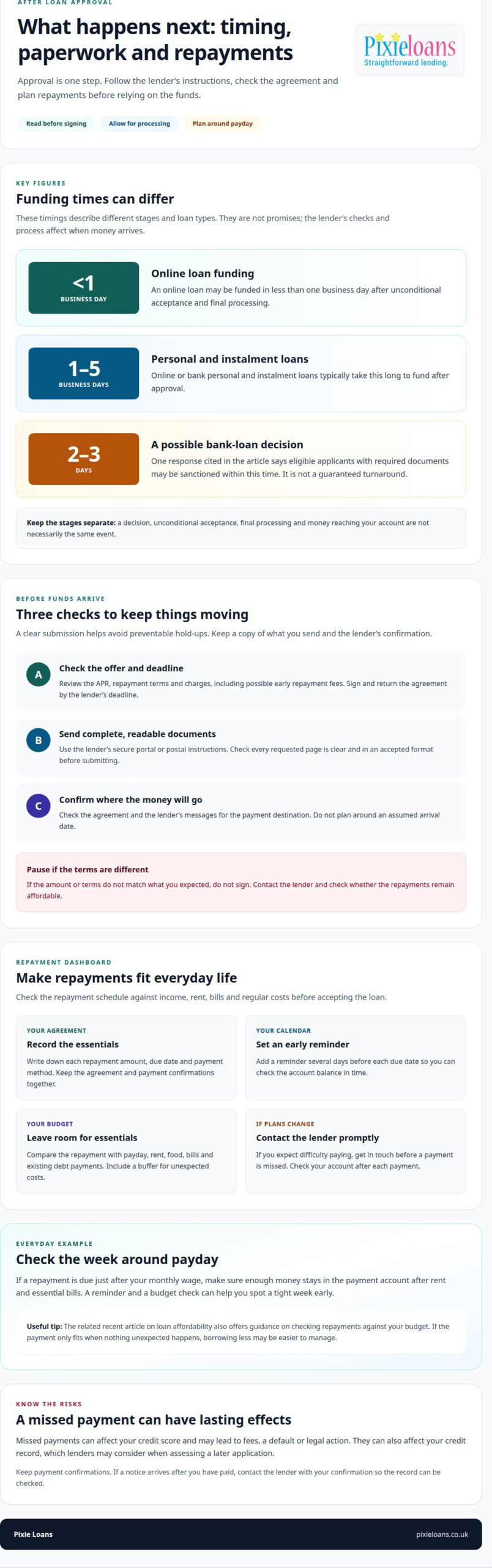
Processing time can vary, so allow for the lender to assess the application and respond rather than relying on an estimated turnaround. One response says that bank loans may be sanctioned within 2-3 days when the applicant is eligible and submits the required documents. This is not a promise that every application will be completed within that period. Make sure requested information is complete and consistent, and follow up through the lender’s stated channel if you need an update. Keep enough time before any payment or other commitment that depends on receiving the funds, and do not treat an expected decision date as confirmation that the money will be available.
Treat a UK loan pre-approval as an early indication, not a guarantee of final approval. The lender may review your application details and carry out a more detailed credit check. A hard credit search generally happens when you formally apply for credit, rather than at the pre-approval stage, so understand when your application becomes formal before proceeding. Check that the personal information you provide matches the records used in a soft credit check, and correct any discrepancies before submitting the application. Open Banking may allow lenders to view bank account information to assess affordability. If you choose to provide access, check what information the lender requests and how it will be used. These checks may inform the lender’s decision, but they do not replace your own review of the agreement and whether the repayments are affordable. Keep a record of the information you supplied and any messages about the application.
Same-day funds after unconditional acceptance
After unconditional acceptance, the lender can complete its final processing before releasing the funds.
Accepting the loan offer
Accept online by following the lender’s instructions and submitting the signed agreement. For a postal offer, sign and return the paperwork as directed. Keep the confirmation so you can track your submission.
Timing of loan funds
An online loan may be funded in less than 1 business day. Upload outstanding documents promptly in clear, accepted formats to help avoid processing delays. For example, a readable scan with every requested page can prevent follow-up requests.
If an application is declined, review the lender’s decision before applying again. Check your credit record and budget first. If you’re ready to explore an application, use the online loan application form.
Submitting outstanding files as soon as they are ready, with the contents plainly readable, supports a quicker funding process. Use accepted formats, and check that each upload is clear before sending it. Taking these steps helps the borrower speed up loan funding by providing the requested documents immediately and in clear formats.
Making loan repayments on time
Start with the repayment schedule in your signed agreement. Note each due date, amount and payment method in your calendar, then set a reminder several days beforehand. If your income arrives monthly, compare the repayment date with payday and essential bills. This helps you spot a tight week before rent, food and other costs are due.
Before accepting a personal loan, make a simple budget using your income, regular outgoings and existing debt payments. Leave a sensible buffer for costs such as travel or an unexpected household repair—a risk property purchasers often minimise by arranging thorough surveys through professional services like A Premier Home Inspection before committing funds. If the planned repayment only fits when nothing goes wrong, the loan may put pressure on your budget. Borrowing less may make repayments easier to manage.
What are the risks of accepting a loan you may struggle to repay? Missed payments can affect your credit score and may lead to fees, a default or legal action. They can also affect your credit record, which lenders may consider when assessing a later application.
Build a routine around the dates in your agreement. For example, if a repayment is due just after your monthly wage, keep enough money available in the account used for payment. Check your balance before the due date and review your budget if a bill rises. If you expect difficulty, contact the lender promptly rather than waiting until a payment is missed.
Keep the agreement and payment confirmations together, digitally or on paper. Review your account after each payment to make sure it has been recorded. If you receive a missed-payment notice despite paying, contact the lender with your confirmation so the record can be investigated.
When applying for credit again, avoid rushing into several applications after one is declined. Multiple credit applications in a short period can affect your score. Lenders may consider your debt repayment history and whether new monthly payments fit your circumstances. Check your budget and eligibility before taking on another commitment.
When and where the loan money is paid
Once the lender completes its checks, the payment timing depends on the loan type and its process. Online or bank personal and instalment loans typically take 1-5 business days to fund after approval. Remember that approval and money arriving in your account are separate steps. Knowing what to do after your loan is approved includes planning around the payment confirmation, rather than relying on an assumed arrival date for an urgent bill.
Check your agreement and the lender’s messages for the payment destination. For a standard personal loan, the agreement should explain how funds will be issued. Make sure the account details in your application are correct, and look out for payment confirmation. If the money is for a specific expense, such as a boiler repair, avoid booking work based only on an expected payment date.
Some UK loans have specific payment arrangements. Online Budgeting Loan applicants receive the money into the account where their benefit is paid. Not every loan uses the same payment route, so read the instructions for your loan and note whether you need to take any further action before funds are released.
Before spending the money, compare the amount received with the agreement. If the figures differ, contact the lender using its official details. Interest and the repayment schedule affect the total cost of borrowing. Include the first repayment in your budget so regular costs do not leave you short. A key part of what to do after your loan is approved is checking that the repayment still fits your income and outgoings.
A credit check may form part of the lender’s assessment. Borrowing more than your budget can support may make missed payments harder to avoid, and missed payments can affect your credit score and report. Review your budget before using the funds, especially if household costs have changed since you applied.
If you’re weighing up borrowing for a specific cost, you can start an application and consider the repayments alongside your budget.
Pixie Loans
Pixie Loans is a UK credit broker that connects people with independent lenders for personal borrowing needs. If you’re considering a loan after reviewing your budget and repayment commitments, Pixie Loans can help you explore options for short-term loans, payday loans, bad credit loans and debt consolidation loans.
Think about the purpose of borrowing and whether the repayments fit alongside essentials such as rent, food and household bills. For example, if you’re considering borrowing to manage existing debts, work out how a new repayment would fit your monthly budget before proceeding. Pixie Loans connects applications with potential lenders rather than lending directly.
To explore your options through Pixie Loans, start an online application or contact us for help at any time of day or night.
Make your next borrowing decision with care
Use this borrowing experience to strengthen your plans for the months ahead. Once essential costs are covered, setting aside a manageable amount can create a buffer for an unexpected expense, such as a broken appliance or a higher energy bill. If saving is not possible yet, review your regular spending and choose one affordable change rather than relying on further borrowing.
Knowing what to do after your loan is approved also means carrying that careful approach into future decisions. Before taking on another commitment, consider what the money needs to cover, whether repayments fit your budget and what could change in your circumstances. A clear plan can help you make choices with less pressure and keep everyday costs in view.
If you’d like to explore an application, take the next step with Pixie Loans. Move at a pace that feels manageable and keep your financial priorities at the centre of your decision.
Frequently Asked Questions
What happens once I have applied online for a personal loan?
After an online personal loan application, the lender checks your details and may ask for evidence of income or outgoings. If you apply through Pixie Loans, your information is passed to independent lenders, who make their own decisions. Each independent Financial Service Provider may perform a credit check; Pixie Loans does not participate in that decision. A lender may issue an offer, decline the application or request further information before deciding.
What happens after a loan is approved in the UK?
Once approved, the lender gives you its final offer and agreement. Read the terms before accepting, particularly the amount, APR, repayment schedule and any charges. If a broker arranged the application, you may be directed to the lender’s own site to view the offer. Approval alone does not mean funds are available, so wait for the lender’s payment confirmation.
How long does it take for loan funds to arrive after approval in the UK?
For a UK online or bank personal or instalment loan, funds typically arrive within 1-5 business days after approval; some online loans may be funded in less than 1 business day. Timing depends on the lender’s processing and whether it has all required details. If you’re planning a payment, such as a repair, wait until the money reaches your account before committing it.
How are loan repayments collected and when does the first payment start?
The lender collects repayments using the method and dates set out in your agreement. The first payment date is shown there, so use it to plan your account balance around payday and essential bills. Check that the scheduled repayments fit your income and budget before borrowing, and leave enough for essential costs. Late repayment can cause you serious money problems. For help, go to moneyhelper.org.uk.