
Credit broker benefits: compare loan terms and get support
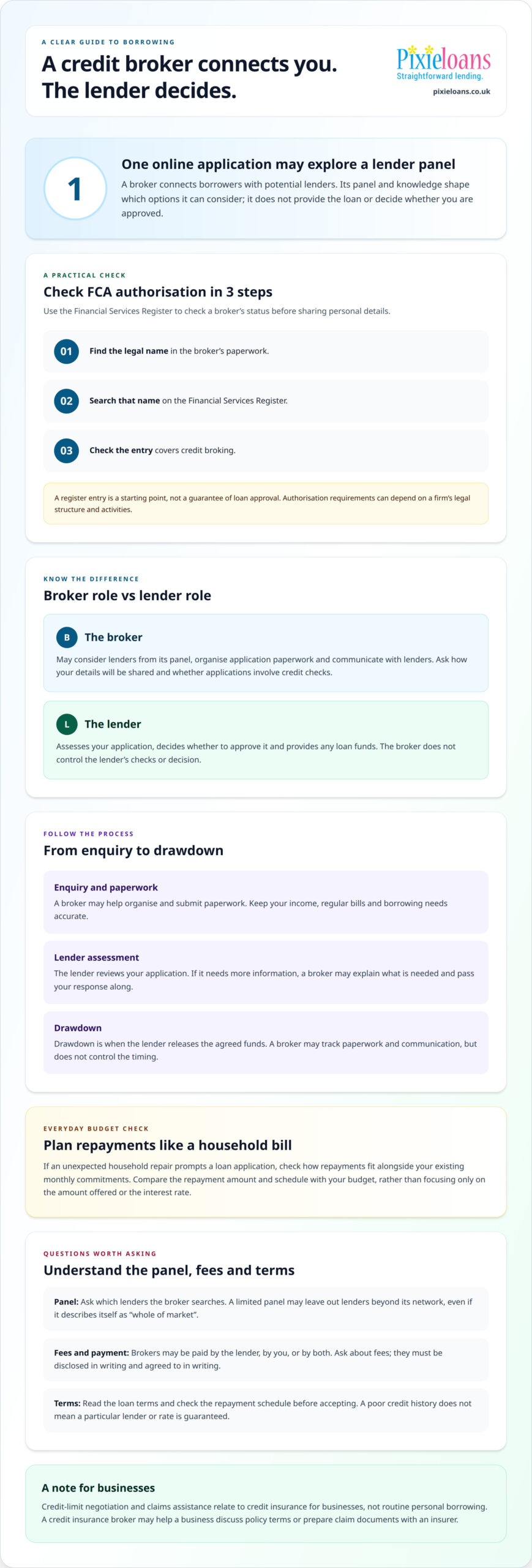
A credit broker connects borrowers with lenders but doesn’t provide loans or decide applications. The benefits of using a credit broker can include exploring options from its lender panel through one online application.
Look beyond the interest rate when comparing a loan. Check the repayment amount and schedule against your budget, just as you would plan for a regular household bill.
This guide explains how credit brokers work, how to check FCA authorisation and what support or loan terms a broker may offer.
Key Takeaways
- Consider how a broker’s lender panel and experience with your circumstances could shape the options they explore.
- Use the Financial Services Register to check a credit broker’s authorisation before sharing personal details.
- Find out how a broker can help with the application process, from paperwork to communication with lenders.
- If you have a poor credit history, explore how a specialist broker may help you consider suitable borrowing options.
What is a credit broker?
A credit broker connects borrowers with lenders. Its panel and lender knowledge shape the options it can consider.
Lender panels and sector experience
Experience can help a broker match your circumstances to lenders’ criteria, but its panel limits the options it reviews.
Broker access versus approaching lenders directly
A broker may save time by considering several lenders. Ask how your details are shared and whether applications involve credit checks, which can affect your credit file.
Lender policies and pricing knowledge
Ask about fees before proceeding. Brokers must disclose fees in writing and obtain your written agreement. Choose one that explains its role and fees clearly, and check its FCA authorisation.
A credit broker introduces you to potential lenders but does not provide the finance. The lender supplies any funds, assesses your application and decides whether to approve it.
FCA authorisation and checking the FCA register
Check a UK credit broker’s status on the Financial Conduct Authority’s Financial Services Register. Search its legal name and confirm that its entry covers credit broking.
- Find the legal name in the broker’s paperwork.
- Search that name on the register.
- Confirm the entry relates to credit broking.
The authorisation or registration a firm needs depends on its legal structure and activities. Some introducers may not need authorisation, depending on what they do. Registration doesn’t guarantee a lender will approve an application. To provide your details for consideration, start a loan application.
An entry on the register is a starting point for checking whether the firm may carry out the activity, rather than a substitute for understanding the service it offers. The Financial Conduct Authority regulates credit brokers and expects transparency about services and fees. Before sharing information, ask what role the broker will play, what services it will provide and what fees may apply. Check that the answers are clear and consistent with the paperwork, and seek clarification if the fee or service is difficult to understand. FCA regulation includes measures intended to protect consumers from unfair practices, but checking an entry does not remove the need to assess the proposed arrangement.
FCA rules require brokers to give customers prescribed information, including about any fees they charge. They do not generally require brokers to provide advice or set fees as fair and reasonable. Treat explanations of costs and the broker’s role as part of your checks, and make sure you understand whether it is advising you or introducing you to another broker. A broker that only introduces clients to other brokers may still need credit broking authorisation, depending on its activities. A broker working with limited companies registered to Companies House may need FCA authorisation, depending on the services it provides. If you are looking for commercial finance, check whether the broker’s activities require FCA authorisation; it may also be a member of the National Association of Commercial Finance Brokers (NACFB).
Support through to drawdown
A credit broker may help with the administration between your enquiry and a lender’s decision. This can include organising application paperwork, submitting it and communicating with the lender. The lender assesses your application and provides any loan funding. Clear guidance on the information needed can make the application process easier to follow.
If a lender requests more information, a broker may explain what is needed and help pass your response to the lender. Keep details of your income, regular bills and borrowing needs accurate, so your application reflects your circumstances. For example, if an unexpected household repair prompts an application, consider how repayments would fit alongside your existing monthly commitments.
Drawdown is when a lender releases the agreed funds. A broker may help track paperwork and communication before this point, but it does not control the lender’s checks or timing. Ask what remains outstanding and read the loan terms before accepting. Check the repayment schedule against your budget, rather than focusing only on the amount offered.
Credit limit support
Credit limit support is more relevant to credit insurance than to a personal loan application. A credit insurance broker can negotiate credit limits and policy terms with insurers on a business’s behalf. For a business that sells goods on invoice, a suitable limit can affect how much customer debt the policy covers. The broker’s specialist knowledge can help explain how proposed limits relate to the business’s credit exposure.
Claims support
Claims assistance also relates to credit insurance, not routine personal borrowing. A credit insurance broker can guide a business through a claim, help prepare documentation and advocate with the insurer. It may also explain contract principles and overdue management. This support can help a business understand the process if a customer fails to pay an invoice, while the insurer considers the claim under the policy.
Broker independence and potential loan terms
An independent broker isn’t tied to one lender, so it can consider options from different providers. Its panel still sets the practical boundaries: lenders outside that network won’t be included in its comparisons. A broker’s relationships with high street banks and smaller specialist lenders may open different routes to funding, depending on the loan and your circumstances.
Those relationships can also help a broker negotiate terms on your behalf. Lenders have different policies and pricing, and a broker familiar with those differences can present your application in a way that fits a lender’s requirements. For example, if you have a poor credit history, a broker may look for providers whose lending criteria better match your situation. This doesn’t mean every lender is considered or that a particular rate will follow.
Ask what the broker means by “whole of market” or “panel”, then find out which lenders its search covers. A legitimate credit broker must make clear that it is a broker, not a direct lender. Also ask how it is paid. Brokers may receive payment from a lender, from the customer, or from both, so knowing the arrangement helps you understand any interests involved.
What risks should I consider when using a credit broker? A limited panel may exclude lenders with different terms, and commission arrangements may affect which products a broker presents. Read the lender’s offer carefully, including the total repayment and schedule, and check that payments fit your budget.
Before proceeding, compare the amount you need with the repayments you can afford. If the terms do not fit, do not borrow more simply because a broker’s network makes an offer available. Weigh the broker’s reach and application support against the limits of its panel, how it is paid and the loan’s full cost.
If you’re ready to share your borrowing details for consideration, complete an application form.
Pixie Loans: Bad Credit Loans
Pixie Loans is a credit broker that connects people seeking bad credit loans with independent lenders. If you have had credit difficulties, its matching service can help you explore potential options. The lender assesses your application and decides whether to offer a loan, so read the repayment terms carefully before accepting.
Start by working out how much you need to borrow and what repayment could fit your budget. If an unexpected household repair is putting pressure on your finances, compare the proposed repayment with rent, bills and existing credit commitments. Borrowing more than you need can make repayments harder to manage.
Pixie Loans also helps people explore Short Term Loans, Payday Loans and Debt Consolidation Loans, depending on their borrowing needs. If you’re considering borrowing, contact Pixie Loans to discuss the next step.
Make your next borrowing decision carefully
Set a borrowing limit based on your budget, not the largest amount available. List essential bills, existing repayments and regular costs, then consider what repayment could fit without leaving you short for everyday needs. Think about how a change in your income or expenses could affect your ability to repay.
The benefits of using a credit broker matter most when they help you make a considered choice, not rush you into borrowing. Take time to read the lender’s offer, understand the repayment schedule and consider whether the loan is necessary. If the repayments do not fit your household budget, pause before accepting.
If you’re ready to take the next step, share your details with Pixie Loans for consideration. Keep your borrowing plans practical and centred on what you can afford. A measured decision today can help protect your financial flexibility in the months ahead.
Frequently Asked Questions
What is a finance broker?
A finance broker connects someone seeking funding with lenders that may consider an application. The broker does not provide the money; the lender decides whether to lend and sets the terms. For example, a business finance broker may help a company explore equipment funding, while a consumer credit broker helps individuals consider personal borrowing. The broker’s role depends on the type of finance.
What does a credit broker do in the UK?
A UK credit broker connects borrowers with potential lenders and may help with application paperwork. The lender assesses the application and makes the lending decision. Credit broking requires relevant Financial Conduct Authority authorisation. Pixie Loans is a broker: the website operator is not a lender or short-term loan provider and does not make loan or credit decisions.
What are the benefits of using a credit broker?
The benefits of using a credit broker can include exploring options from more than one lender and getting help with the application process. A broker may save time by handling lender communications, but its panel limits which options it considers. Before borrowing, check that the repayments fit your budget alongside essential bills and other costs. If you are unsure, seek free debt advice at moneyhelper.org.uk. Late repayment can cause you serious money problems. Missing repayments may also negatively affect your credit rating and future borrowing ability.
How can a credit broker find loans suited to my circumstances?
A broker may use details such as your income, credit history, requested amount and loan purpose to identify lenders whose criteria may fit. If you are managing several existing repayments, explain this clearly so the broker can understand your needs. Make sure your application is accurate. Lenders still assess affordability and decide whether to offer credit.
Can a credit broker access lenders and deals not available directly to borrowers?
A broker may introduce you to lenders in its network, including providers you have not approached yourself. Its familiarity with different lender requirements can help it identify potential options, but the panel limits its search and lenders may also accept direct applications. Ask what the panel covers and compare the full repayment terms. Do not assume a broker-only deal will be available.
How do UK credit brokers compare with going directly to a lender?
Applying directly to a lender lets you discuss that provider’s products without an intermediary. A broker can help you explore options across its panel and may handle parts of the application process. If you are comparing offers, look at the repayment amounts, schedules and total cost of borrowing. A broker’s panel may not include every lender, so weigh its scope against the support it provides.