
How to Get Credit with Bad Credit: A Guide for UK Borrowers
A poor credit history doesn’t automatically rule out borrowing, but it’s sensible to prepare before applying. If you’re wondering how do you get credit with bad credit, start by checking your credit reports and working out what you can comfortably repay.
It’s natural to feel unsure about what lenders may consider or whether an application could affect your credit record. MoneyHelper’s guide to checking your credit report is a useful place to start. Before borrowing for an everyday expense, such as a car repair, compare the repayment with your regular bills and other commitments.
Key Takeaways
- Bad credit describes your credit history, but lenders set their own criteria and assess applications individually.
- Check your credit reports for unfamiliar or incorrect entries, then follow the relevant agency’s process to dispute errors.
- Before applying, total your essential outgoings, decide how much you need and test repayments against your budget.
- Pixie Loans connects applicants with independent lenders through an online platform. A match or application does not guarantee an offer or acceptance.
How getting credit with bad credit works in the UK
Definition: “Bad credit” describes negative or limited information in your credit history. It doesn’t mean every lender will refuse you.
Lenders set their own criteria and assess applications individually. A credit score is only one indicator, and credit reference agencies use different scales. Lenders may also assess the information in your credit file using their own methods. Learn more about credit ratings.
What might lenders consider in an application?
Lenders may consider your borrowing history and affordability separately. Your file can show how you’ve managed credit, while an affordability assessment considers whether repayments fit your income and commitments. No single factor guarantees acceptance.
Practical ways to strengthen your credit profile before applying
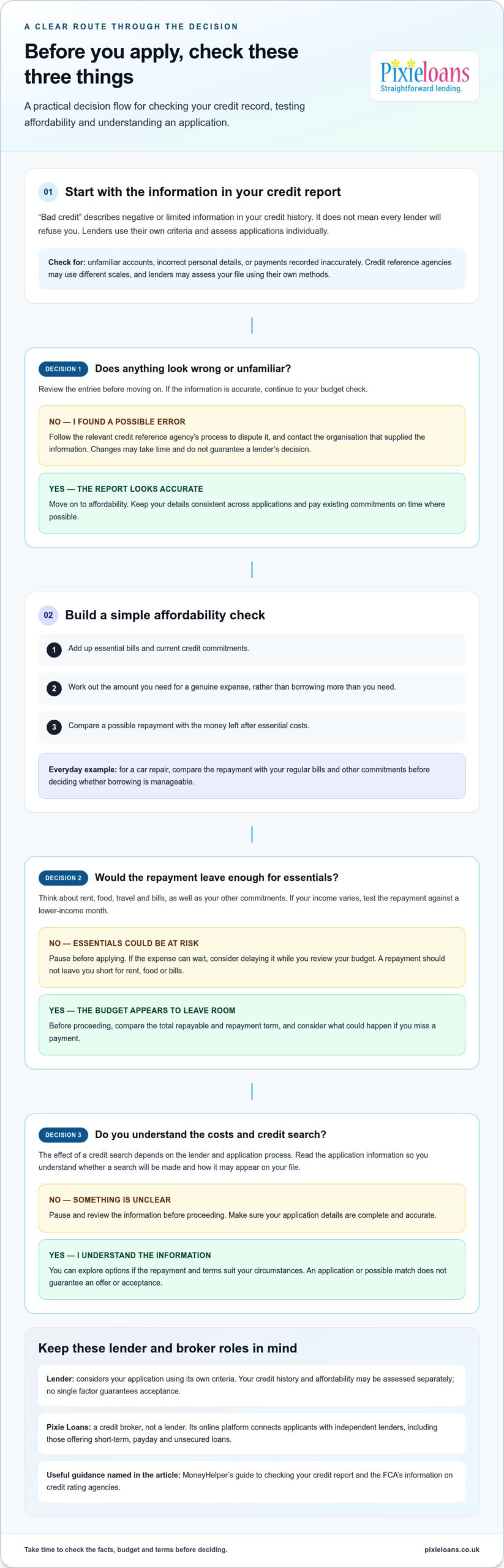
Check your credit reports for unfamiliar accounts, incorrect personal details or payments recorded inaccurately. If you spot a problem, follow the agency’s process to dispute it and contact the organisation that supplied the information. Keep your details consistent across applications and pay existing commitments on time where possible. These steps can help keep your records accurate, but changes may take time and won’t guarantee a lender’s decision.
Everyday habits that may help
Review your household bills and regular commitments before deciding what repayment you could manage. For practical steps, read MoneyHelper’s guide to checking your credit report.
What if you spot an error?
Follow the relevant credit reference agency’s process to dispute inaccurate information, and contact the organisation that supplied it. The FCA’s information on credit rating agencies explains their role.
How to prepare for a credit application you can afford
If you’re asking how do you get credit with bad credit, start with your budget and the reason you need to borrow. Borrow only for a genuine need, and work out what repayment would leave enough for essentials.
- Add up essential bills and current credit commitments.
- Identify the amount you need, then compare a possible repayment with the money left after those costs.
- Compare the total repayable, the repayment term and what could happen if you miss a payment.
Check your budget and application
If rent, food, travel and bills leave little spare, a repayment could put essentials at risk. Use the loan repayment calculator to explore repayments. Credit-search effects depend on the lender and application process, so read the information about the search before proceeding. Check that your application details are complete and accurate.
If the repayments fit your budget, you can apply to explore credit options. An application doesn’t guarantee an offer or acceptance.
How Pixie Loans can help you explore credit options
Pixie Loans is a credit broker, not a lender. Its online platform connects applicants with independent lenders, including those offering short-term, payday and unsecured loans. A match or application does not guarantee an offer or acceptance. Pixie Loans does not provide financial advice, so review any loan information carefully and decide whether the repayments and terms suit your circumstances.
When might it be better not to borrow?
If repayments would leave you short for rent, food or bills, pause before applying. If the expense can wait, consider delaying it while you review your budget. For wider money guidance, visit MoneyHelper. If you’ve checked affordability and want to explore options, you can use the online application form. Applying doesn’t guarantee a result.
Take your next step at a pace that works for you
Knowing how do you get credit with bad credit starts with choosing what suits your circumstances, not feeling pressured to act quickly. If a repayment still looks uncertain after you’ve checked your budget, take time to review your options or wait until your finances feel more manageable. A loan should meet a genuine need without putting essentials at risk.
When you’re ready, Pixie Loans’ online application can help you explore options from independent lenders. Review the information provided and consider whether the repayment and terms work for you. Exploring options is not a reason to borrow before you feel comfortable.
Explore your application options when you’re ready. A careful decision, including choosing to wait, can help you move forward with confidence.
Frequently Asked Questions
Can you get credit with bad credit?
It may be possible, but no lender can promise approval. There’s no single answer to how do you get credit with bad credit, because lenders use their own criteria. Before applying, check that the amount is for a genuine need and that repayments leave enough for essentials. If your income changes from week to week, use a lower-income month to test whether the repayments are manageable.
How can I improve my credit score quickly?
There’s no reliable instant fix, and changes may take time to show on your report. Look for details such as an account you don’t recognise or a payment marked late by mistake, then follow the agency’s correction process. Keep your personal details up to date and pay existing commitments on time where you can. Don’t take out new credit just to try to change your score.
Does applying for credit with bad credit affect your credit file?
It depends on the lender and the search used during the application process. Read the application information to understand whether a search will be made and how it may appear on your file. If the explanation is unclear, pause before proceeding. Avoid sending several applications in a short period without first reviewing your budget and the information requested.
Can a credit broker guarantee a loan if you have bad credit?
No. A broker can help you explore lender options, but it can’t promise that an independent lender will accept your application. The lender makes its own decision based on its criteria and assessment. Be cautious of claims that approval is guaranteed, and read the terms carefully before agreeing to proceed. Treat a possible match as an option to consider, not a confirmed loan.
What should I do if I cannot afford loan repayments?
Don’t proceed if repayments would put essentials, such as rent, food or energy bills, at risk. Consider whether you can delay the expense or make a different plan. If you’re already struggling with debts, use MoneyHelper’s money guidance to find information on support. Taking time to review your choices is a sensible step, not a setback.